
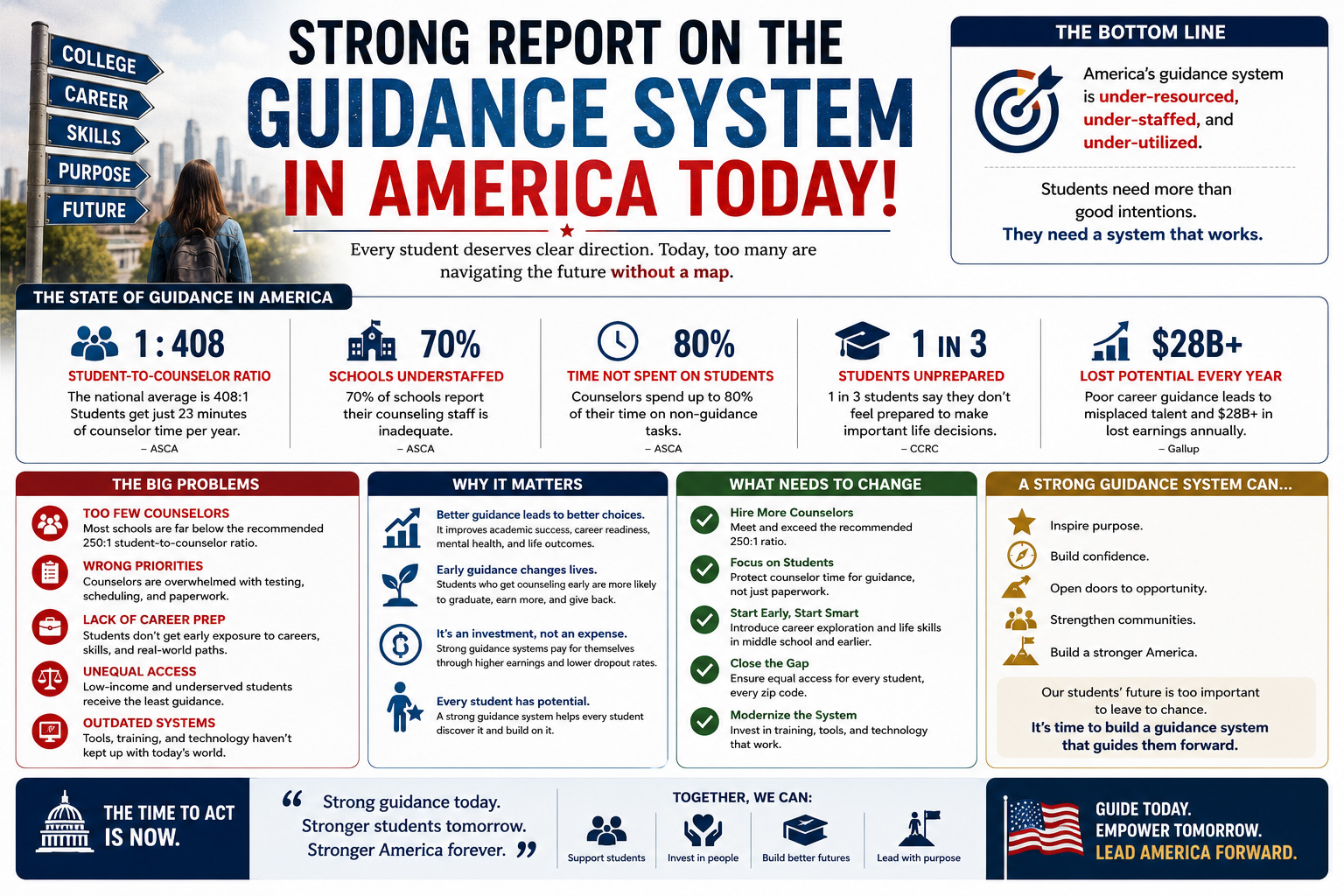
For generations, the American education system has treated guidance as if it were a supplementary service: useful, humane and desirable, but less fundamental than instruction itself. That distinction has become increasingly difficult to defend. A student can complete every required course, graduate with respectable grades and still make a costly decision about college, training or work with remarkably little individualized help. The consequences are not confined to admissions. They reach into student debt, persistence, degree completion, career satisfaction and economic mobility.
Affluent families have responded to this complexity by building a private navigation system around their children. They purchase college consultants, tutors, test preparation, essay coaching, campus visits and financial advice. They can begin planning before high school, revise a strategy when circumstances change and call an experienced adult when a deadline, aid form or admissions decision becomes confusing. Lower-income families are far more likely to rely on a school counselor who may be responsible for hundreds of students while also managing scheduling, crises, attendance, testing, behavioral concerns and mental health referrals.